Dream Art Theater: A ceremonial approach to dream imagery and the Great Journey of the soul
By Dennis Klocek 8 min read
Overview
Dream Art Theater is a method for exploring the deeper potentials of dream imagery through artistic practice, symbolism, and inner listening. While the work makes use of simple wax modeling as its primary art form, the process itself is broader, engaging imagination, movement, feeling, and reflection.

Dream Art Theater is based in several traditional healing approaches that address life’s challenges through ceremony rather than analysis alone. At its heart is a journey through a fourfold mandala of the directions, well known from the Sun Dance tradition. Seven Arrows by Hyemeyohsts Storm offers a deeply spiritual entry into that lineage.
In this view, the mandala represents a soul journey through life itself. Mandalic sequencing provides an elegant stage for a theatrical journey into one’s own inner life. Symbols discovered in dreams can be “auditioned” to act as players in the universal drama of human life, from heroic striving to surrender and wisdom.
Once found, these dream images take their place on the mandala in a ceremony of self-discovery.
The Ceremonial Journey
Dream Art Theater makes use of ideas found in traditional cultures such as Hawaiian Kahuna religion and the deeply insightful spiritual puppetry found in the work of Frank Fool’s Crow.
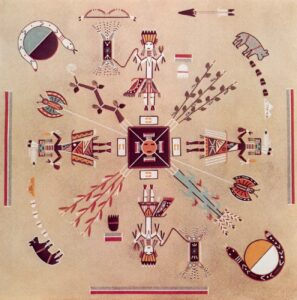
Similar ceremonial spaces appear in Navajo sand painting, Celtic seasonal festivals, labyrinth traditions, and many other ritual forms that symbolize a journey through the solar flux points of the year. These turning points in the movement of the Sun become symbolic actors, revealing inner aspects of the human soul.
Although these ceremonials are culturally distinct, they orbit a shared insight: the mandala provides a powerful structure for creating ceremonial journeys that petition higher spiritual forces. Across traditions, practices that strengthen the connection between deep soul images and higher powers have long served as pathways toward emotional and spiritual health.
Image, Movement, Word, Incubation
Dream Art Theater follows a sequence found in many traditional healing rites: image, movement, word, and incubation.
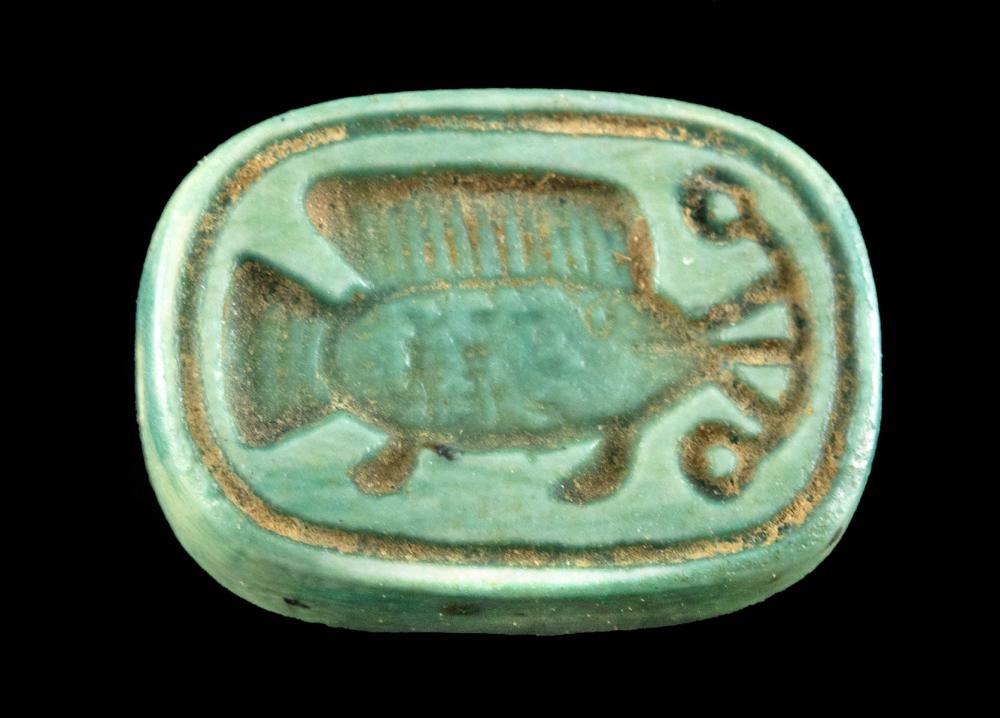
In ancient Egypt, a symbol chosen to represent a disease process or soul condition might be engraved onto a medallion. A stranded fish hieroglyph could represent a physical ailment, while two upraised arms signified a soul reaching for blessing. The image was formed through deliberate movement, often accompanied by spoken words or mantras, and then worn during sleep to invite healing dreams.
In Dream Art Theater, this sequence is echoed in a simple, contemporary art practice. Upon waking, a small wax figure is formed spontaneously. Wax is used because it responds directly to warmth, touch, and movement, making it an ideal medium for shaping images that arise before thinking takes over.
Why Wax
Wax occupies a unique place among artistic materials. It responds immediately to warmth and pressure, softening in the hands and hardening again when released. This makes it especially suited for working with images that arise in the threshold state between sleeping and waking.
Wax does not demand planning or skill. It invites shaping rather than control. Because it carries warmth and scent, it engages the senses directly, allowing images to emerge through movement rather than through analysis. In Dream Art Theater, wax serves as a bridge between the body’s felt experience and the soul’s imaginal life.
After modeling, attention turns inward to the rhythm of the heartbeat. A word or two is then journaled, not to explain the image, but to register its mood. In the evening, the imagery of the day is recalled before sleep, allowing the process to incubate.
Listening to the Heart
Listening to the heart is not a metaphor in Dream Art Theater. It is a practice of quieting habitual thought so that a subtler form of perception can arise. By attending to the rhythm of the heartbeat, attention is drawn away from mental commentary and toward embodied feeling.
This moment of listening creates a receptive inner space. The word or phrase that follows is not meant to interpret the image, but to echo its emotional tone. Over time, these words become reliable guides to the mood and movement of the dream imagery itself.
Finding the Players
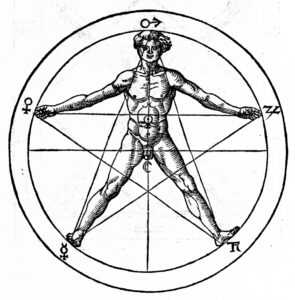
The first task in Dream Art Theater is discovering which dream images can serve as meaningful actors in the drama of the soul. Not all dream images are immediately useful in this way. There is a process of “audition.”
Beeswax softened with fragrant oils such as lavender and bergamot becomes the material basis for this auditioning. Each morning, a small figure is formed from whatever image comes to mind. It does not need to be important or meaningful. What matters is that the practice is repeated daily.
A drawn mandala of the four directions becomes the stage on which these figures are placed. Placement is guided not by interpretation, but by the feelings stirred through the act of making. This simple image-and-movement process engages sensory, emotional, and imaginative capacities at once, creating a bridge between body, soul, and image.
The Mandala as Stage
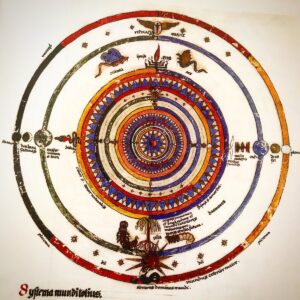
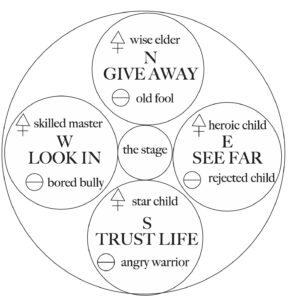
The stage for the drama is a fourfold mandala, expanded beyond the basic directions through insights from solar festivals, the work of Rudolf Steiner, and the depth psychology of Carl Jung.
In this mandala, the east is the domain of the heroic child, newly arrived from a higher world. This descent from the higher world plants a seed that seeks a future vision. Aristotle referred to this phase as the pathetic soul, a soul shaped by drama and pathos. Jung described it as the “hero(ic) child”.
The Life Journey
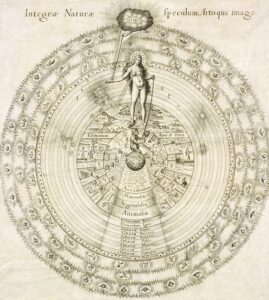
The heroic child dances the look-at-me dance, bearing a sense of mission and future promise. Over the course of life, that early orientation is tested, reshaped, and eventually transformed as the soul journeys through the remaining directions of the mandala.
As the soul moves clockwise through the mandala, the heroic child of the east journeys into the south, where the star child is born. Here, trust in life must develop in the face of rejection and disappointment. The star child learns resilience by learning to make plans and bring them to completion, gradually seeking a personal star to guide the way forward.
The turn into the west marks the transition into adulthood. The heroic dreams of impressing a receptive world begin to fail. The west is the place of introspection, where solutions to increasingly complex relationships require turning inward. Here, flexible and creative responses arise not from expectation, but from self-knowledge.
The final turn leads to the north, the place of wisdom and giving away. The reality of limitation, and ultimately death, becomes a hidden source of healing. In the north, the soul learns to release what is no longer essential. When this give-away occurs, karmic knots that produce suffering can begin to loosen, allowing gratitude to replace regret.
The Great Divide
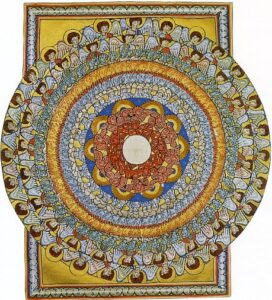
A profound divide exists between the expectations of the heroic and star-seeking phases of life and the introspective wisdom of maturity.
The Kahunas describe the early phase as participation in the look-at-me dance, rooted in the belief that one carries the future of the world. Rudolf Steiner called this a sense of karmic mission. Carl Jung spoke of it as my song, the call to individuation.
Over time, resistance from an indifferent world tempers this unconscious certainty into a conscious search for individuality. By midlife, repeated setbacks force a reckoning. The look-at-me stance must transform into what Martin Buber called I-am-Thou consciousness, where meaning is found not through recognition, but through relationship.
Wounding, Dreams, and Reversal
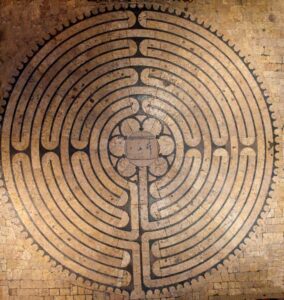
In adulthood, the heroic personality is often reshaped through suffering and the pressures of daily life. When the early dream of recognition collapses, an existential wound can emerge. Jung described this as the pain of a soul that feels it has abandoned its own uniqueness.
Dreams play a crucial role in navigating this terrain. Illness, loss, loneliness, and conflict often first appear as symbolic processes in dreams. Becoming more conscious of dream imagery allows insight into one’s karmic relationships and unspoken inner movements.
On the mandala, this work unfolds through introspection and culminates in the wisdom of giving away. Without this reversal, the resentments of the unrecognized child may harden, distorting maturity and blocking individuation.
A Glimpse of the Practice
Dream Art Theater uses a simple, repeating artistic structure to engage imagination, feeling, and will. Wax modeling, heartbeat awareness, brief journaling, and evening reflection form a rhythm that gradually reveals which images carry life and which have completed their task.
Over time, these images are “auditioned” as Alpha and Omega figures, representing what holds future potential and what has reached completion. Their dialogue, guided by carefully held questions rather than answers, becomes a dramatic mirror of the soul’s journey.
The full practice unfolds over time and through repetition. It is not meant to be rushed or mastered, but entered as a living process.
The Invitation
Dream Art Theater opens a safe and imaginative doorway into the world of dreams, where human beings return each night to rest, restore, and reweave meaning. Wax modeling serves as the grounding art practice, while the larger theatrical structure supports a deep encounter with biography, relationship, and destiny.
This article offers an orientation to the work. The new book, The Great Journey: Explore Life’s Lessons with the Practice of Dream Art Theater, goes further, guiding readers step by step through the full Dream Art Theater process, the dramatic journey of the mandala, and the deeper questions that arise along the way. It includes worksheets, mandala imagery and journal prompts to help guide your journey.
If this approach resonates, consider purchasing the book.
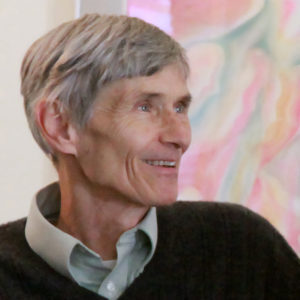
Dennis Klocek
Dennis Klocek, MFA, is co-founder of the Coros Institute, an internationally renowned lecturer, and teacher. He is the author of nine books, including the newly released Colors of the Soul; Esoteric Physiology and also Sacred Agriculture: The Alchemy of Biodynamics. He regularly shares his alchemical, spiritual, and scientific insights at soilsoulandspirit.com.
1 Comment
Leave a Comment
Similar Writings
Remembering and Beholding
You are shopping in the grocery store and run across an old friend. You both start to talk about mutual friends and they mention old Ted what’s his name. You draw a blank, then say that his name wasn’t Ted but Fred. Your friend says you are right but that his name was neither Fred…
Healing Meditations Workshop
This is a partial transcription of the workshop’s first lecture. To listen to the entire workshop, visit the lecture page. — For students of Dennis who have an interest in prayer, this partial transcription of his Healing Meditations workshop describes a form of hygienic prayer that Dennis taught as a ritual of healing. Unlike some…
I have journals FULL of my dreams which range from vignettes to full-length movie-type dreams filled with detail. I have worked with them, of course, but never in a very systematic way. I have always hoped that Dennis would delve into this wonderfully mysterious realm. So, you can imagine how exciting it is for me to learn of his new book. I’ll be ordering it today!
Thank you, both!
Blessings and Happy Winter Solstice ~ Camille